





Từ vựng Emotions B2: 60 từ và cụm từ diễn đạt cảm xúc tự nhiên, có bài tập
Ở trình độ B2, nói về cảm xúc không chỉ dừng lại ở những từ quen thuộc như happy, sad, angry hay worried. Người học cần diễn đạt rõ mức độ cảm xúc, nguyên nhân hình thành cảm xúc và cách cảm xúc ảnh hưởng đến suy nghĩ, hành vi hoặc các mối quan hệ.
Bài học từ vựng Emotions B2 của Anh Ngữ SEC tổng hợp 60 từ và cụm từ trọng tâm, kèm ví dụ theo ngữ cảnh, collocations, word family, cách phân biệt từ gần nghĩa, lỗi sai thường gặp và 5 dạng bài tập có đáp án. Nội dung phù hợp để nâng cao khả năng giao tiếp, trình bày quan điểm và chuẩn bị cho IELTS, TOEIC hoặc VSTEP.
Key takeaways:
- Nắm 60 từ và cụm từ về cảm xúc tích cực, lo lắng, thất vọng, tức giận, cảm xúc xã hội và khả năng kiểm soát cảm xúc.
- Sử dụng các collocations B2 như feel overwhelmed, have mixed feelings, maintain composure và build emotional resilience.
- Hiểu word family và phân biệt những từ gần nghĩa nhưng khác sắc thái.
- Biết paraphrase cảm xúc và lựa chọn cách diễn đạt phù hợp với giao tiếp hoặc văn viết.
- Nhận diện lỗi sai về giới từ, từ loại, collocations và cấu trúc diễn đạt cảm xúc.
- Luyện bài tập theo ngữ cảnh và ứng dụng từ vựng vào IELTS Speaking/Writing, TOEIC Reading và VSTEP B2.
Chủ đề Emotions ở level B2 cần học những gì?
Emotions là chủ đề từ vựng liên quan đến cảm xúc, tâm trạng và phản ứng tâm lý của con người trước những tình huống trong cuộc sống. Ở trình độ B1, người học chủ yếu tập trung nhận biết cảm xúc, diễn đạt mức độ và giải thích nguyên nhân bằng những cấu trúc tương đối quen thuộc.
Khi lên B2, yêu cầu diễn đạt trở nên sâu hơn. Thay vì chỉ nói I was worried about the exam, người học có thể sử dụng I felt apprehensive about the upcoming exam because I wasn’t fully prepared. Từ apprehensive thể hiện sự lo ngại về một điều chưa xảy ra, giúp câu nói cụ thể hơn về sắc thái cảm xúc.
Một điểm quan trọng khác là khả năng diễn đạt cảm xúc phức tạp hoặc mâu thuẫn. Chẳng hạn, một người có thể vừa hào hứng vừa lo lắng khi nhận công việc mới. Khi đó, cụm have mixed feelings phù hợp hơn việc chỉ sử dụng một tính từ riêng lẻ.
Ở B2, chủ đề này còn mở rộng sang những vấn đề như áp lực học tập, cảm xúc tại nơi làm việc, tác động của mạng xã hội, sự đồng cảm và khả năng kiểm soát cảm xúc. Đây cũng là những nội dung hữu ích khi trình bày quan điểm trong IELTS Speaking Part 3, VSTEP Speaking hoặc bài viết nghị luận.
Tham khảo thêm: Từ vựng cảm xúc B1 – Diễn đạt cảm xúc qua collocations và ngữ cảnh
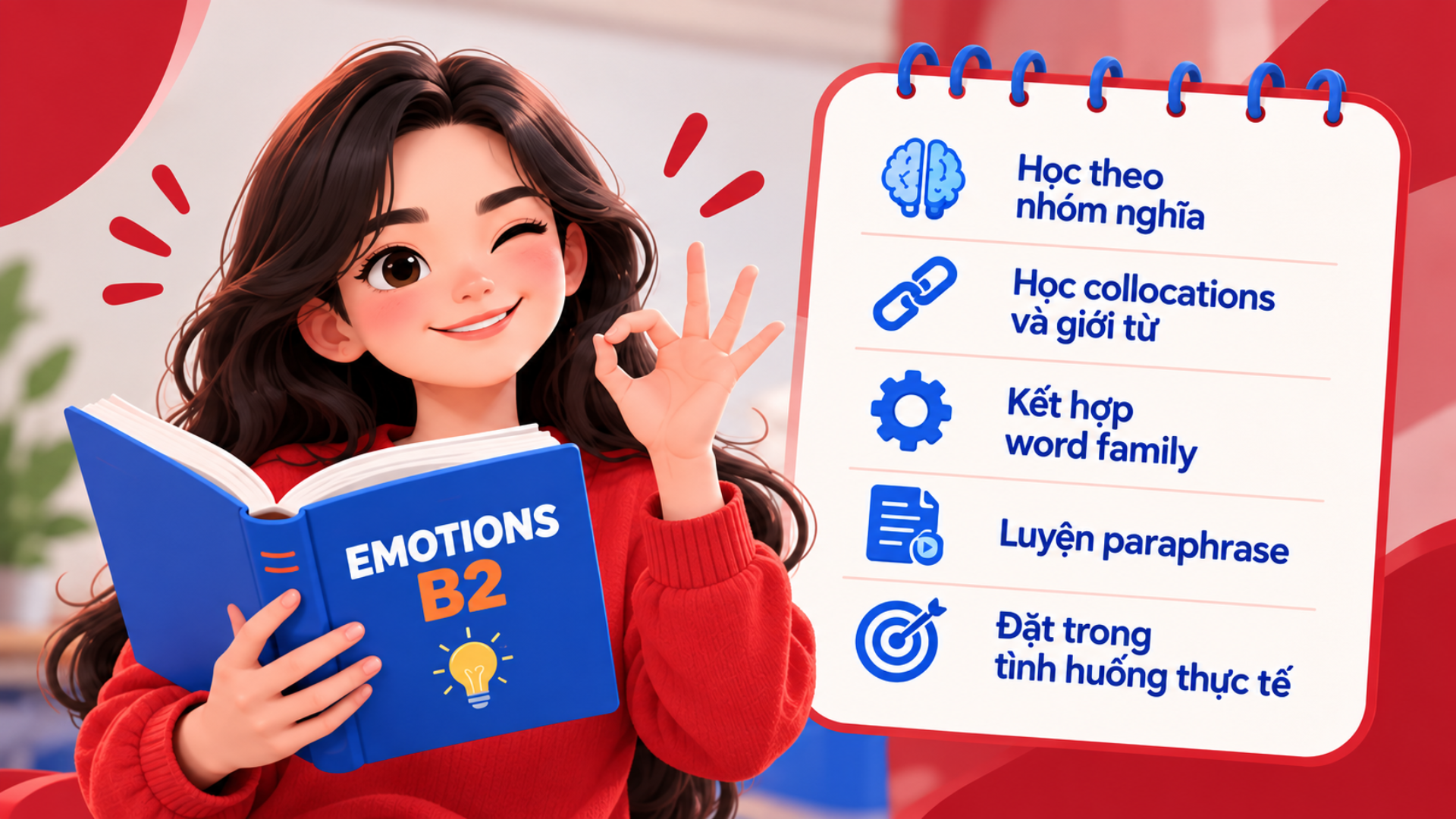
Cách học từ vựng Emotions level B2 hiệu quả
1. Học theo nhóm nghĩa và sắc thái cảm xúc
Những từ cùng chỉ cảm xúc tích cực không phải lúc nào cũng thay thế được cho nhau.
Ví dụ:
- Content: hài lòng với hoàn cảnh hiện tại.
- Fulfilled: cảm thấy mãn nguyện vì cuộc sống hoặc công việc có ý nghĩa.
- Elated: vô cùng vui sướng vì một sự kiện tích cực.
- Gratified: cảm thấy hài lòng vì nỗ lực hoặc mong muốn được đáp ứng.
Phân biệt sắc thái giúp người học lựa chọn từ chính xác thay vì chỉ học nghĩa tiếng Việt.
2. Học từ cùng collocations và giới từ
Một tính từ thường đi cùng những giới từ hoặc cụm từ quen thuộc.
Ví dụ:
- Apprehensive about an interview: lo ngại về cuộc phỏng vấn.
- Overwhelmed by responsibilities: cảm thấy quá tải vì trách nhiệm.
- Resentful towards someone: cảm thấy bất mãn với ai đó.
- Reassured by someone’s words: cảm thấy yên tâm nhờ lời nói của ai đó.
Ghi nhớ cả cụm giúp hạn chế lỗi dịch từng từ và sử dụng sai giới từ.
3. Kết hợp word family để mở rộng cách diễn đạt
Từ một động từ, người học có thể hình thành nhiều dạng từ khác nhau.
Ví dụ:
- Frustrate (v): làm ai đó bực bội.
- Frustration (n): sự bực bội.
- Frustrated (adj): cảm thấy bực bội.
- Frustrating (adj): gây bực bội.
So sánh:
- I felt frustrated by the delay.
- The delay was frustrating.
- The situation caused considerable frustration.
Cùng một ý nghĩa nhưng mỗi câu sử dụng một cấu trúc khác nhau.
4. Luyện paraphrase thay vì lặp từ
Ở B2, paraphrase không có nghĩa là thay mọi từ đơn giản bằng một từ khó hơn. Mục tiêu là diễn đạt cùng một nội dung bằng cấu trúc khác mà vẫn giữ đúng ý.
Ví dụ:
- I was very angry about the decision.
- I was outraged by the decision.
Hai câu đều thể hiện sự tức giận, nhưng outraged còn nhấn mạnh phản ứng mạnh trước điều bị cho là bất công hoặc không thể chấp nhận.
5. Đặt từ vựng trong tình huống thực tế
Một câu có đầy đủ bối cảnh thường dễ hiểu hơn danh sách từ đơn lẻ.
Ví dụ:
Although I was initially intimidated by the new working environment, my colleagues helped me feel more confident.
Câu này cho thấy cảm xúc ban đầu, nguyên nhân và sự thay đổi cảm xúc.
Tham khảo thêm: Bộ từ vựng Collocations tiếng Anh – Học cách kết hợp từ tự nhiên
Bảng từ vựng Emotions level B2
Bảng gồm 60 từ và cụm từ trọng tâm được lựa chọn theo định hướng sử dụng B2. Một số từ đã xuất hiện ở cấp độ thấp hơn được mở rộng về sắc thái nghĩa, collocations và ngữ cảnh nhằm giúp người học diễn đạt chính xác hơn.
Nhóm 1: Cảm xúc tích cực và sự hài lòng
| Word/Phrase | Level | Loại từ | Nghĩa tiếng Việt | Word family | Collocation/Cụm dùng tự nhiên | Ví dụ |
|---|---|---|---|---|---|---|
| 1. fulfilled | B2 | adj | Mãn nguyện, thấy có ý nghĩa | fulfil, fulfilment | feel fulfilled | She feels fulfilled by her teaching career. |
| 2. content | B2 | adj | Hài lòng với hiện tại | contentment | content with life | He is content with his current lifestyle. |
| 3. elated | B2 | adj | Vô cùng vui sướng | elation | feel elated | She felt elated after winning the competition. |
| 4. thrilled | B2 | adj | Rất phấn khích | thrill, thrilling | thrilled about | We were thrilled about the opportunity. |
| 5. overjoyed | B2 | adj | Mừng rỡ, vui sướng tột độ | joy, joyful | overjoyed at the news | Her parents were overjoyed at the news. |
| 6. gratified | B2 | adj | Hài lòng vì điều mong đợi đã thành hiện thực | gratify, gratification | feel gratified | I felt gratified by the positive feedback. |
| 7. optimistic | B2 | adj | Lạc quan | optimism | optimistic about the future | She remains optimistic about her career. |
| 8. reassured | B2 | adj | Cảm thấy yên tâm hơn | reassure, reassurance | feel reassured by | I felt reassured by the doctor’s explanation. |
| 9. inspired | B2 | adj | Được truyền cảm hứng | inspire, inspiration | inspired by | We were inspired by her determination. |
| 10. appreciative | B2 | adj | Trân trọng, biết ơn | appreciate, appreciation | appreciative of | I’m appreciative of your continued support. |
Nhóm 2: Lo lắng, áp lực và bất an
| Word/Phrase | Level | Loại từ | Nghĩa tiếng Việt | Word family | Collocation/Cụm dùng tự nhiên | Ví dụ |
|---|---|---|---|---|---|---|
| 11. apprehensive | B2 | adj | Lo ngại về điều sắp xảy ra | apprehension | apprehensive about | He was apprehensive about starting university. |
| 12. uneasy | B2 | adj | Bất an, không thoải mái | unease | feel uneasy | I felt uneasy during the conversation. |
| 13. tense | B2 | adj | Căng thẳng | tension | a tense atmosphere | The atmosphere became tense after the announcement. |
| 14. overwhelmed | B2 | adj | Quá tải về cảm xúc hoặc công việc | overwhelm, overwhelming | overwhelmed by | She was overwhelmed by her responsibilities. |
| 15. distressed | B2 | adj | Rất buồn hoặc lo âu | distress | visibly distressed | He appeared visibly distressed after the incident. |
| 16. restless | B2 | adj | Bồn chồn, không yên | restlessness | feel restless | I felt restless before the interview. |
| 17. insecure | B2 | adj | Thiếu tự tin, không thấy an toàn | insecurity | feel insecure about | She feels insecure about her public speaking skills. |
| 18. vulnerable | B2 | adj | Dễ bị tổn thương | vulnerability | feel emotionally vulnerable | He felt emotionally vulnerable after the argument. |
| 19. intimidated | B2 | adj | Bị đe dọa tinh thần, e ngại | intimidate, intimidation | intimidated by | New employees may feel intimidated by senior managers. |
| 20. agitated | B2 | adj | Kích động, bồn chồn | agitate, agitation | become agitated | He became agitated when the discussion grew heated. |
Nhóm 3: Thất vọng, buồn bã và mất động lực
| Word/Phrase | Level | Loại từ | Nghĩa tiếng Việt | Word family | Collocation/Cụm dùng tự nhiên | Ví dụ |
|---|---|---|---|---|---|---|
| 21. disheartened | B2 | adj | Nản lòng | dishearten | feel disheartened | She felt disheartened by the repeated failures. |
| 22. discouraged | B2 | adj | Mất động lực, nản chí | discourage, discouragement | become discouraged | Don’t become discouraged by one poor result. |
| 23. devastated | B2 | adj | Suy sụp, vô cùng đau buồn | devastate, devastation | absolutely devastated | He was devastated by the unexpected loss. |
| 24. regretful | B2 | adj | Hối tiếc | regret | feel regretful about | She felt regretful about her harsh words. |
| 25. isolated | B2 | adj | Cảm thấy bị cô lập | isolate, isolation | feel socially isolated | Remote workers sometimes feel socially isolated. |
| 26. nostalgic | B2 | adj | Hoài niệm | nostalgia | feel nostalgic about | I feel nostalgic about my childhood. |
| 27. gloomy | B2 | adj | U ám, buồn rầu | gloom | a gloomy mood | He was in a gloomy mood all afternoon. |
| 28. heartbroken | B2 | adj | Đau lòng sâu sắc | heartbreak | feel heartbroken | She was heartbroken when the relationship ended. |
| 29. dissatisfied | B2 | adj | Không hài lòng | dissatisfaction, satisfy | dissatisfied with | Customers were dissatisfied with the service. |
| 30. disillusioned | B2 | adj | Vỡ mộng, mất niềm tin | disillusion, disillusionment | disillusioned with | He became disillusioned with the organisation. |
Nhóm 4: Tức giận, bất mãn và xung đột
| Word/Phrase | Level | Loại từ | Nghĩa tiếng Việt | Word family | Collocation/Cụm dùng tự nhiên | Ví dụ |
|---|---|---|---|---|---|---|
| 31. irritated | B2 | adj | Khó chịu, cáu kỉnh | irritate, irritation | irritated by | She was irritated by the constant noise. |
| 32. infuriated | B2 | adj | Vô cùng tức giận | infuriate, fury | absolutely infuriated | He was infuriated by the unfair accusation. |
| 33. outraged | B2 | adj | Phẫn nộ | outrage | outraged by | Residents were outraged by the decision. |
| 34. offended | B2 | adj | Cảm thấy bị xúc phạm | offend, offence | deeply offended | She was deeply offended by his remarks. |
| 35. bitter | B2 | adj | Cay đắng, oán giận | bitterness | feel bitter about | He still feels bitter about the incident. |
| 36. defensive | B2 | adj | Có thái độ phòng thủ | defend, defensiveness | become defensive | She became defensive when questioned. |
| 37. hostile | B2 | adj | Thù địch, thiếu thiện chí | hostility | a hostile reaction | His comments received a hostile reaction. |
| 38. resentful | B2 | adj | Bất mãn, oán giận | resent, resentment | resentful towards | She felt resentful towards her unfair manager. |
| 39. frustrated | B2 | adj | Bực bội vì bị cản trở | frustrate, frustration | frustrated with | He grew frustrated with the slow progress. |
| 40. exasperated | B2 | adj | Bực mình đến mức mất kiên nhẫn | exasperate, exasperation | exasperated by | The teacher was exasperated by repeated interruptions. |
Nhóm 5: Cảm xúc xã hội và sự đồng cảm
| Word/Phrase | Level | Loại từ | Nghĩa tiếng Việt | Word family | Collocation/Cụm dùng tự nhiên | Ví dụ |
|---|---|---|---|---|---|---|
| 41. empathetic | B2 | adj | Có khả năng thấu cảm | empathy, empathise | empathetic towards | A good listener is empathetic towards others. |
| 42. sympathetic | B2 | adj | Cảm thông, chia sẻ | sympathy, sympathise | sympathetic to | Her manager was sympathetic to her situation. |
| 43. compassionate | B2 | adj | Giàu lòng trắc ẩn | compassion | compassionate towards | The volunteers were compassionate towards those in need. |
| 44. ashamed | B2 | adj | Cảm thấy hổ thẹn | shame, shameful | ashamed of | He felt ashamed of his behaviour. |
| 45. guilty | B2 | adj | Cảm thấy có lỗi | guilt | guilty about | I felt guilty about breaking my promise. |
| 46. envious | B2 | adj | Ghen tị với điều người khác có | envy | envious of | She was envious of her friend’s success. |
| 47. jealous | B2 | adj | Ghen, ghen tị | jealousy | jealous of | He felt jealous of the attention she received. |
| 48. self-conscious | B2 | adj | Ngại ngùng vì quá chú ý đến bản thân | self-consciousness | feel self-conscious | I feel self-conscious when speaking in public. |
| 49. embarrassed | B2 | adj | Xấu hổ, ngượng ngùng | embarrass, embarrassment | deeply embarrassed | She was embarrassed by her mistake. |
| 50. awkward | B2 | adj | Ngượng nghịu, khó xử | awkwardness | feel awkward | He felt awkward at the formal dinner. |
Nhóm 6: Kiểm soát cảm xúc và trạng thái tâm lý
| Word/Phrase | Level | Loại từ | Nghĩa tiếng Việt | Word family | Collocation/Cụm dùng tự nhiên | Ví dụ |
|---|---|---|---|---|---|---|
| 51. resilience | B2 | noun | Khả năng phục hồi sau khó khăn | resilient | build resilience | Difficult experiences can help people build resilience. |
| 52. composure | B2 | noun | Sự bình tĩnh, tự chủ | composed, compose | maintain composure | She maintained her composure during the interview. |
| 53. self-esteem | B2 | noun | Lòng tự trọng, sự đánh giá về bản thân | esteem | boost self-esteem | Supportive feedback can boost students’ self-esteem. |
| 54. emotional well-being | B2 | noun phrase | Sức khỏe tinh thần và cảm xúc | emotion, emotional | improve emotional well-being | Healthy relationships contribute to emotional well-being. |
| 55. emotional exhaustion | B2 | noun phrase | Sự kiệt sức về cảm xúc | exhaust, exhaustion | experience emotional exhaustion | Long working hours may lead to emotional exhaustion. |
| 56. emotional support | B2 | noun phrase | Sự hỗ trợ về tinh thần | support, supportive | offer emotional support | Friends can offer emotional support during difficult times. |
| 57. emotional awareness | B2 | noun phrase | Khả năng nhận biết cảm xúc | aware, awareness | develop emotional awareness | Reflecting on feelings can develop emotional awareness. |
| 58. emotional response | B2 | noun phrase | Phản ứng cảm xúc | respond, response | emotional response to | Fear is a common emotional response to danger. |
| 59. emotional regulation | B2 | noun phrase | Việc điều chỉnh cảm xúc | regulate, regulation | improve emotional regulation | Mindfulness exercises may support emotional regulation. |
| 60. mixed feelings | B2 | noun phrase | Những cảm xúc trái chiều | feel, feeling | have mixed feelings about | I have mixed feelings about moving abroad. |
Các nhóm từ vựng quan trọng trong chủ đề Emotions
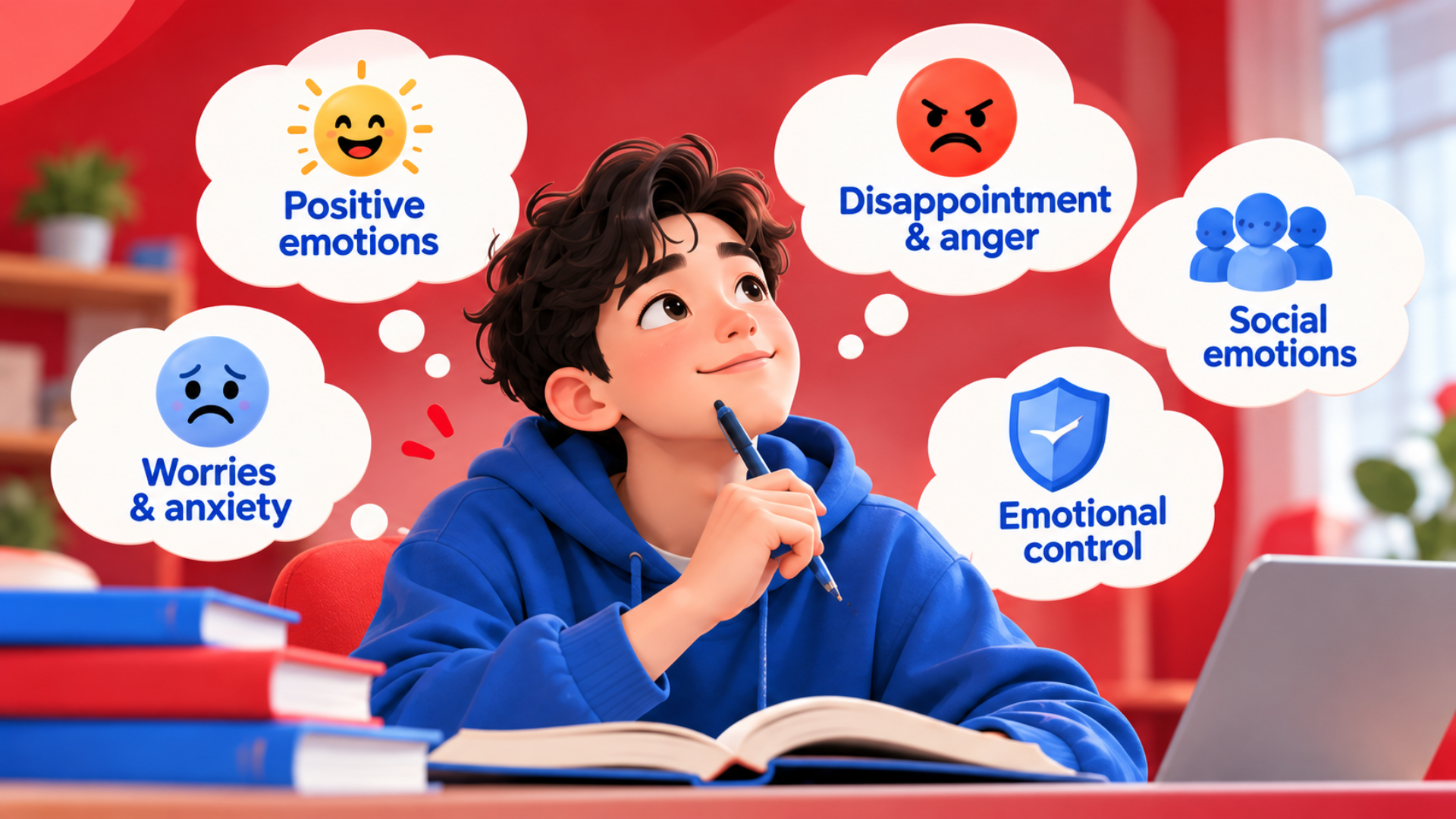
Sáu nhóm từ sau giúp hệ thống lại bảng từ vựng và nhận biết cách sử dụng theo từng tình huống.
1. Cảm xúc tích cực và thành tựu cá nhân
- Fulfilled: mãn nguyện, cảm thấy có ý nghĩa.
- Content: hài lòng với cuộc sống hiện tại.
- Elated: vô cùng vui sướng.
- Thrilled: rất phấn khích.
- Overjoyed: mừng rỡ.
- Gratified: hài lòng vì điều mong đợi được đáp ứng.
- Optimistic: lạc quan.
- Reassured: cảm thấy yên tâm.
- Inspired: được truyền cảm hứng.
- Appreciative: trân trọng, biết ơn.
Ví dụ: After completing the project, she felt fulfilled and optimistic about her future.
2. Lo âu, căng thẳng và cảm giác bất an
- Apprehensive: lo ngại trước điều sắp xảy ra.
- Uneasy: bất an.
- Tense: căng thẳng.
- Overwhelmed: quá tải.
- Distressed: đau buồn hoặc lo âu mạnh.
- Restless: bồn chồn.
- Insecure: thiếu tự tin, không cảm thấy an toàn.
- Vulnerable: dễ bị tổn thương.
- Intimidated: cảm thấy e ngại trước người hoặc tình huống gây áp lực.
- Agitated: kích động, bồn chồn.
Ví dụ: Many students feel overwhelmed and apprehensive before important examinations.
3. Buồn bã, thất vọng và mất niềm tin
- Disheartened: nản lòng.
- Discouraged: mất động lực.
- Devastated: suy sụp.
- Regretful: hối tiếc.
- Isolated: bị cô lập.
- Nostalgic: hoài niệm.
- Gloomy: buồn rầu, u ám.
- Heartbroken: đau lòng sâu sắc.
- Dissatisfied: không hài lòng.
- Disillusioned: vỡ mộng.
Ví dụ: He became disillusioned with his job after years of unrealistic expectations.
4. Tức giận và phản ứng trước xung đột
- Irritated: khó chịu.
- Infuriated: cực kỳ tức giận.
- Outraged: phẫn nộ.
- Offended: bị xúc phạm.
- Bitter: cay đắng.
- Defensive: có thái độ phòng thủ.
- Hostile: thù địch.
- Resentful: bất mãn.
- Frustrated: bực bội vì bị cản trở.
- Exasperated: bực mình đến mức mất kiên nhẫn.
Ví dụ: The employees were outraged by the unfair policy and became increasingly resentful towards management.
5. Cảm xúc trong các mối quan hệ xã hội
- Empathetic: thấu cảm.
- Sympathetic: cảm thông.
- Compassionate: giàu lòng trắc ẩn.
- Ashamed: hổ thẹn.
- Guilty: cảm thấy có lỗi.
- Envious: ghen tị.
- Jealous: ghen, ghen tị.
- Self-conscious: ngại ngùng vì quá chú ý đến bản thân.
- Embarrassed: xấu hổ.
- Awkward: khó xử.
Ví dụ: Being empathetic towards others can help reduce misunderstandings in relationships.
6. Khả năng kiểm soát và cân bằng cảm xúc
- Resilience: khả năng phục hồi sau khó khăn.
- Composure: sự bình tĩnh, tự chủ.
- Self-esteem: lòng tự trọng.
- Emotional well-being: sức khỏe tinh thần và cảm xúc.
- Emotional exhaustion: kiệt sức về cảm xúc.
- Emotional support: hỗ trợ tinh thần.
- Emotional awareness: nhận biết cảm xúc.
- Emotional response: phản ứng cảm xúc.
- Emotional regulation: điều chỉnh cảm xúc.
- Mixed feelings: cảm xúc trái chiều.
Ví dụ: Developing emotional awareness and resilience can help people handle stressful situations more effectively.
Word family cần nhớ trong chủ đề Emotions
Word family là nhóm từ có quan hệ về cấu tạo và ý nghĩa. Ở B2, người học cần biết thay đổi từ loại để tránh lặp từ và sử dụng cấu trúc linh hoạt trong câu nói, bài viết.
| Từ gốc | Danh từ | Động từ | Tính từ | Trạng từ | Ví dụ ứng dụng |
|---|---|---|---|---|---|
| fulfil | fulfilment | fulfil | fulfilled, fulfilling | — | Volunteering gives her a sense of fulfilment. |
| reassure | reassurance | reassure | reassured, reassuring | reassuringly | His reassuring words helped me relax. |
| overwhelm | — | overwhelm | overwhelmed, overwhelming | overwhelmingly | She felt overwhelmed by the workload. |
| distress | distress | distress | distressed, distressing | distressingly | The news caused considerable distress. |
| frustrate | frustration | frustrate | frustrated, frustrating | frustratingly | The constant delays were frustrating. |
| offend | offence | offend | offended, offensive | offensively | His offensive remarks upset several people. |
| resent | resentment | resent | resentful | resentfully | She felt resentment towards her former manager. |
| empathise | empathy | empathise | empathetic | empathetically | Teachers should respond empathetically to students’ concerns. |
| sympathise | sympathy | sympathise | sympathetic | sympathetically | He listened sympathetically to her problems. |
| regulate | regulation | regulate | regulated, regulatory | — | Learning to regulate emotions is an important skill. |
Những cách dùng dễ nhầm
Frustrated và frustrating
- Frustrated mô tả người cảm thấy bực bội.
- Frustrating mô tả sự việc gây bực bội.
Ví dụ:
- I was frustrated by the delay.
- The delay was frustrating.
Reassured và reassuring
- Reassured: cảm thấy yên tâm.
- Reassuring: mang lại cảm giác yên tâm.
Ví dụ:
- I felt reassured after talking to my teacher.
- Her explanation was reassuring.
Fulfilled và fulfilling
- Fulfilled: người cảm thấy mãn nguyện.
- Fulfilling: công việc hoặc trải nghiệm mang lại sự mãn nguyện.
Ví dụ:
- She feels fulfilled in her career.
- Teaching is a fulfilling career.
Offended và offensive
- Offended: cảm thấy bị xúc phạm.
- Offensive: có tính chất xúc phạm.
Ví dụ:
- He was offended by the comment.
- The comment was offensive.
Lưu ý rằng không phải mọi từ đều có đủ bốn loại từ được sử dụng phổ biến. Các dấu “—” trong bảng thể hiện dạng không thông dụng hoặc không phù hợp để sử dụng trong những ngữ cảnh đang học.
Tham khảo thêm: Top 50 lỗi dùng từ phổ biến của người Việt – Phân biệt word family và cách dùng từ
Collocations và cụm từ tự nhiên chủ đề Emotions
Ở trình độ B2, khả năng kết hợp từ chính xác quan trọng không kém việc biết nghĩa từng từ. Những collocations sau phù hợp với giao tiếp, học tập, công việc và các bài thi yêu cầu diễn đạt quan điểm.
| Collocation/Phrase | Nghĩa tiếng Việt | Dùng trong ngữ cảnh nào? | Ví dụ |
|---|---|---|---|
| 1. feel a sense of fulfilment | Cảm thấy mãn nguyện | Thành tựu, công việc có ý nghĩa | Helping others gives me a sense of fulfilment. |
| 2. be thrilled about | Rất hào hứng về | Tin vui, cơ hội mới | She was thrilled about the scholarship. |
| 3. feel deeply grateful | Cảm thấy vô cùng biết ơn | Nhận sự giúp đỡ | I feel deeply grateful for your support. |
| 4. feel reassured | Cảm thấy yên tâm | Sau khi nhận thông tin tích cực | We felt reassured after the meeting. |
| 5. have mixed feelings about | Có cảm xúc trái chiều về | Thay đổi, quyết định quan trọng | I have mixed feelings about changing jobs. |
| 6. feel apprehensive about | Cảm thấy lo ngại về | Sự kiện chưa xảy ra | She felt apprehensive about the interview. |
| 7. be overwhelmed by | Bị quá tải bởi | Công việc, trách nhiệm, cảm xúc | He was overwhelmed by his responsibilities. |
| 8. struggle with insecurity | Vật lộn với cảm giác thiếu tự tin | Học tập, quan hệ xã hội | Some teenagers struggle with insecurity. |
| 9. cope with anxiety | Đối phó với lo âu | Áp lực cá nhân | Exercise helps her cope with anxiety. |
| 10. experience emotional exhaustion | Trải qua kiệt sức cảm xúc | Áp lực kéo dài | Long working hours can cause emotional exhaustion. |
| 11. feel isolated from | Cảm thấy tách biệt khỏi | Xa cách xã hội | He felt isolated from his classmates. |
| 12. become disillusioned with | Mất niềm tin vào | Công việc, tổ chức, lý tưởng | She became disillusioned with the company. |
| 13. express regret over | Bày tỏ sự hối tiếc về | Quyết định, hành động trước đó | He expressed regret over his behaviour. |
| 14. take offence at | Cảm thấy bị xúc phạm bởi | Nhận xét, lời nói | She took offence at his comment. |
| 15. feel resentful towards | Cảm thấy bất mãn với | Mối quan hệ thiếu công bằng | He felt resentful towards his employer. |
| 16. lose one’s temper | Mất bình tĩnh, nổi nóng | Xung đột | He lost his temper during the argument. |
| 17. show empathy towards | Thể hiện sự thấu cảm với | Giao tiếp, hỗ trợ người khác | Teachers should show empathy towards students. |
| 18. offer emotional support | Động viên, hỗ trợ tinh thần | Khi người khác gặp khó khăn | Her friends offered emotional support. |
| 19. maintain composure | Giữ bình tĩnh | Phỏng vấn, tranh luận, khủng hoảng | She maintained her composure under pressure. |
| 20. build emotional resilience | Xây dựng khả năng phục hồi cảm xúc | Đối mặt khó khăn | Challenges can help build emotional resilience. |
| 21. regulate one’s emotions | Điều chỉnh cảm xúc | Kiểm soát phản ứng | Children gradually learn to regulate their emotions. |
| 22. boost self-esteem | Nâng cao lòng tự trọng | Giáo dục, phát triển cá nhân | Positive feedback can boost self-esteem. |
| 23. feel emotionally drained | Cảm thấy kiệt sức về tinh thần | Sau áp lực kéo dài | I felt emotionally drained after the difficult week. |
| 24. be deeply moved by | Xúc động sâu sắc bởi | Câu chuyện, hành động ý nghĩa | We were deeply moved by her kindness. |
| 25. experience overwhelming joy | Trải nghiệm niềm vui tràn ngập | Thành tựu, khoảnh khắc đặc biệt | She experienced overwhelming joy when her child was born. |
Cách nâng cấp câu bằng collocations
Câu đơn giản:
I was very stressed because I had too much work.
Câu B2:
I felt overwhelmed by my workload and struggled to maintain my composure.
Câu đơn giản:
My friend helped me when I was sad.
Câu B2:
My friend offered emotional support when I was going through a difficult period.
Câu đơn giản:
I was happy and sad about moving abroad.
Câu B2:
I had mixed feelings about moving abroad because I was excited about the opportunity but reluctant to leave my family.
Các câu nâng cấp không chỉ thay đổi từ vựng mà còn diễn đạt nguyên nhân, mức độ và mối quan hệ giữa những cảm xúc.
Lỗi sai thường gặp khi dùng từ vựng Emotions
Lỗi 1: Nhầm danh từ stress và tính từ stressed
- Câu sai: I am very stress because of my job.
- Câu đúng: I am very stressed because of my job.
- Giải thích: Stress thường là danh từ hoặc động từ. Khi mô tả người đang chịu căng thẳng, dùng tính từ stressed. Có thể nói My job is stressful khi mô tả công việc gây áp lực.
Lỗi 2: Nhầm overwhelmed và overwhelming
- Câu sai: I feel overwhelming because I have too many assignments.
- Câu đúng: I feel overwhelmed because I have too many assignments.
- Giải thích: Overwhelmed mô tả người cảm thấy quá tải; overwhelming mô tả điều gì đó gây cảm giác quá tải.
Lỗi 3: Dùng sai giới từ sau jealous
- Câu sai: She is jealous with her colleague’s success.
- Câu đúng: She is jealous of her colleague’s success.
- Giải thích: Khi nói ghen tị với ai hoặc điều gì, dùng jealous of. Trong ngữ cảnh ghen tị với thành tựu, envious of cũng phù hợp.
Lỗi 4: Dịch từng từ khi diễn đạt cảm xúc trái chiều
- Câu sai: I have a mixed feeling about studying abroad.
- Câu đúng: I have mixed feelings about studying abroad.
- Giải thích: Cụm tự nhiên, thông dụng là have mixed feelings about something. Danh từ feelings thường được dùng ở số nhiều trong cấu trúc này.
Lỗi 5: Dùng sai từ loại sau feel
- Câu sai: He felt emotionally exhaustion after the project.
- Câu đúng: He felt emotionally exhausted after the project.
- Giải thích: Sau feel thường dùng tính từ để mô tả trạng thái. Nếu muốn sử dụng danh từ, có thể viết He experienced emotional exhaustion after the project.
Lỗi 6: Dùng sai giới từ trong take offence
- Câu sai: She took offence of his remarks.
- Câu đúng: She took offence at his remarks.
- Giải thích: Cụm chuẩn là take offence at something, nghĩa là cảm thấy bị xúc phạm bởi điều gì.
Lỗi 7: Nhầm empathetic và sympathetic
- Câu sai về lựa chọn nghĩa: She understood exactly how he felt, so she was sympathetic.
- Câu phù hợp hơn: She understood how he felt, so she was empathetic.
- Giải thích: Sympathetic không sai ngữ pháp trong câu đầu, nhưng empathetic thể hiện chính xác hơn khả năng hiểu cảm xúc của người khác từ góc nhìn của họ. Sympathetic thường nhấn mạnh sự cảm thông trước khó khăn.
Lỗi 8: Dùng cách diễn đạt thiếu phù hợp trong văn viết trang trọng
- Câu chưa phù hợp với văn phong: Employees totally freak out when they have loads of work.
- Câu phù hợp hơn: Employees may feel overwhelmed when facing excessive workloads.
- Giải thích: Freak out và loads of work mang sắc thái thân mật. Trong bài luận về áp lực công việc, feel overwhelmed và excessive workloads thường phù hợp hơn. Câu gốc vẫn có thể dùng trong giao tiếp không trang trọng.
Tham khảo thêm: Từ vựng Writing Skills B1 – Cách dùng từ chính xác khi diễn đạt và viết tiếng Anh
Phân biệt các từ dễ nhầm trong chủ đề Emotions
| Từ dễ nhầm | Khác nhau thế nào? | Ví dụ đúng |
|---|---|---|
| Empathetic / Sympathetic | Empathetic nhấn mạnh khả năng thấu hiểu cảm xúc người khác. Sympathetic nhấn mạnh sự cảm thông, chia sẻ trước khó khăn. | She is empathetic towards anxious students. / He was sympathetic to her situation. |
| Envious / Jealous | Envious thường chỉ mong muốn có điều người khác đang có. Jealous có thể diễn tả sự ghen tị hoặc lo mất đi một mối quan hệ, sự quan tâm. Hai từ có thể trùng nghĩa trong một số ngữ cảnh. | I was envious of her success. / He felt jealous when his partner spent time with someone else. |
| Anxious / Apprehensive | Anxious diễn tả lo âu nói chung. Apprehensive nhấn mạnh sự lo ngại trước điều có thể xảy ra. | She feels anxious about her finances. / He was apprehensive about the interview. |
| Frustrated / Disheartened | Frustrated nhấn mạnh sự bực bội khi mục tiêu bị cản trở. Disheartened nhấn mạnh sự giảm hy vọng hoặc mất tinh thần. | I’m frustrated by the delays. / She felt disheartened after several rejections. |
| Outraged / Offended | Outraged là phẫn nộ mạnh trước điều bị cho là sai trái. Offended là cảm thấy bị xúc phạm hoặc tổn thương vì lời nói, hành động. | Citizens were outraged by the injustice. / He was offended by the joke. |
| Overwhelmed / Devastated | Overwhelmed là quá tải vì công việc hoặc cảm xúc mạnh, có thể tích cực hoặc tiêu cực. Devastated thường chỉ đau buồn, suy sụp nghiêm trọng. | I was overwhelmed by the support. / She was devastated by the loss. |
| Content / Fulfilled | Content là hài lòng với hiện tại. Fulfilled là cảm thấy mãn nguyện vì điều mình làm có ý nghĩa. | He is content with his lifestyle. / She feels fulfilled by her work. |
| Guilty / Ashamed | Guilty thường liên quan đến việc nhận thấy mình đã làm sai. Ashamed nhấn mạnh cảm giác hổ thẹn về hành động hoặc bản thân. | I felt guilty about lying. / He was ashamed of his behaviour. |
Paraphrase cơ bản với từ vựng Emotions B2
1. Very happy → elated / overjoyed / thrilled
- She was very happy about her results.
- She was elated when she received her results.
2. Very angry → infuriated / outraged
- People were very angry about the unfair treatment.
- People were outraged by the unfair treatment.
3. Very worried → deeply concerned / apprehensive
- He was very worried about the upcoming interview.
- He felt apprehensive about the upcoming interview.
4. Very tired mentally → emotionally exhausted / emotionally drained
- The employees were mentally exhausted after several difficult weeks.
- The employees felt emotionally drained after weeks of pressure.
5. Feeling happy and sad at the same time → having mixed feelings
- I felt happy and sad about leaving my hometown.
- I had mixed feelings about leaving my hometown.
6. Staying calm in a difficult situation → maintaining composure
- She remained calm despite the criticism.
- She maintained her composure despite the criticism.
Khi paraphrase, cần kiểm tra ngữ cảnh và mức độ cảm xúc. Chẳng hạn, devastated không phải lựa chọn phù hợp để thay cho sad trong mọi tình huống vì cường độ của nó mạnh hơn nhiều.
Đoạn mẫu sử dụng từ vựng Emotions level B2
Topic: Dealing with pressure and emotions at university
At the beginning of my second year at university, I was apprehensive about leading a group project. I had always been fairly self-conscious when speaking English, and the workload left me feeling overwhelmed. Two classmates were also frustrated because our plans kept changing. At first, I became defensive whenever they questioned my decisions.
However, after an honest discussion, I realised that everyone had mixed feelings about the project. We were thrilled by the opportunity but uneasy about the deadline. Our lecturer offered emotional support and encouraged us to focus on one task at a time.
I tried to maintain my composure during meetings and show more empathy towards my teammates. By the end of the semester, I felt reassured that we could cooperate effectively. Finishing the project gave me a genuine sense of fulfilment, and the experience strengthened my resilience.
Giải thích từ và cụm từ nổi bật:
- Apprehensive about: lo ngại về một việc sắp xảy ra.
- Self-conscious: ngại ngùng vì quá chú ý đến cách người khác nhìn nhận mình.
- Overwhelmed: quá tải vì khối lượng công việc hoặc cảm xúc.
- Frustrated: bực bội khi mọi việc không diễn ra như mong muốn.
- Defensive: phản ứng phòng thủ khi bị chất vấn.
- Mixed feelings: cảm xúc trái chiều.
- Thrilled: rất hào hứng.
- Uneasy: bất an, không thoải mái.
- Emotional support: sự hỗ trợ tinh thần.
- Maintain my composure: giữ bình tĩnh.
- Empathy: sự thấu cảm.
- Reassured: cảm thấy yên tâm.
- Sense of fulfilment: cảm giác mãn nguyện.
- Resilience: khả năng phục hồi và tiếp tục đối mặt khó khăn.
Đoạn văn sử dụng cấu trúc kể lại trải nghiệm, giải thích nguyên nhân và thể hiện sự thay đổi cảm xúc theo thời gian. Đây là cách triển khai phù hợp khi nói về một thử thách, trải nghiệm học tập hoặc sự trưởng thành trong IELTS Speaking Part 2 và VSTEP Speaking.
Bài tập từ vựng Emotions level B2
Task 1: Match words with meanings
Ghép từ 1–10 với nghĩa A–J.
| STT | Word |
|---|---|
| 1 | Elated |
| 2 | Apprehensive |
| 3 | Resentful |
| 4 | Composure |
| 5 | Empathetic |
| 6 | Disillusioned |
| 7 | Vulnerable |
| 8 | Overwhelmed |
| 9 | Self-esteem |
| 10 | Nostalgic |
Meanings:
A. Cảm thấy hoài niệm về quá khứ.
B. Vô cùng vui sướng vì một sự kiện tích cực.
C. Lòng tự trọng và sự đánh giá về giá trị bản thân.
D. Lo ngại trước một tình huống có thể xảy ra.
E. Cảm thấy bất mãn, oán giận kéo dài.
F. Khả năng giữ bình tĩnh và tự chủ.
G. Có khả năng thấu hiểu cảm xúc của người khác.
H. Mất niềm tin khi thực tế không như kỳ vọng.
I. Dễ bị tổn thương về thể chất hoặc tinh thần.
J. Cảm thấy quá tải vì nhiều trách nhiệm hoặc cảm xúc.
Task 2: Fill in the blanks
Điền từ hoặc cụm từ thích hợp vào chỗ trống. Mỗi từ/cụm từ được sử dụng một lần.
Word bank: distressed – reassured – envious – isolated – resentful – emotional exhaustion – mixed feelings – offended – regulate – fulfilled
- After several months of working overtime, she began to experience __________.
- He felt deeply __________ by the disrespectful comments.
- I have __________ about moving abroad because I will miss my family.
- The teacher’s explanation left the students feeling __________.
- People who work remotely without much social contact may feel __________.
- She felt slightly __________ of her colleague’s achievements.
- He became __________ after being unfairly blamed for the mistake.
- The volunteers felt __________ after completing the community project.
- Students need to learn how to __________ their emotions during stressful situations.
- The child appeared __________ after being separated from his family.
Task 3: Choose the correct answer
Chọn đáp án đúng A, B, C hoặc D.
1. She was apprehensive ______ the upcoming job interview.
A. for
B. about
C. of
D. with
2. The speaker’s personal story was deeply ______.
A. moved
B. move
C. moving
D. movement
3. I felt completely ______ by the unexpected news of the tragedy.
A. devastate
B. devastating
C. devastated
D. devastation
4. Teachers should show empathy ______ students who are struggling emotionally.
A. to
B. with
C. towards
D. of
5. She tends to take offence ______ even mildly critical comments.
A. at
B. for
C. in
D. on
6. The job is emotionally ______, and many employees feel ______ after a long shift.
A. exhausting / exhausted
B. exhausted / exhausting
C. exhaustion / exhausted
D. exhaust / exhausting
7. Despite the criticism, she ______ composed throughout the meeting.
A. kept
B. maintained
C. remained
D. held
8. He was ______ with the results because they failed to meet his expectations.
A. elated
B. dissatisfied
C. reassured
D. content
9. Supportive teachers can help students ______ confidence.
A. make
B. build
C. do
D. take
10. Despite several setbacks, she demonstrated remarkable ______.
A. resilient
B. resilience
C. resiliently
D. resile
Task 4: Vocabulary in context
Đọc đoạn văn và trả lời 5 câu hỏi.
Reading passage: The emotional impact of social media
Social media can influence how young people perceive themselves and respond to everyday experiences. Some students become increasingly self-conscious when they compare their appearance or achievements with carefully selected images online. This comparison may intensify feelings of insecurity and envy.
However, online platforms can also provide emotional support. Students who feel isolated may find communities where they can share their concerns and receive encouraging responses. Such interactions can help them feel reassured that they are not facing difficulties alone.
The challenge is learning to regulate emotional responses rather than allowing online opinions to determine self-esteem. Developing emotional awareness, setting reasonable boundaries and maintaining supportive relationships offline can contribute to emotional well-being. Ultimately, social media itself is not the only factor; how people use it and interpret what they see also matters.
Questions:
- What does self-conscious mean in the passage?A. Proud of personal achievements
B. Excessively concerned about how others see you
C. Completely uninterested in others
D. Confident in every social situation - According to the passage, what may intensify feelings of insecurity and envy?A. Limiting screen time
B. Comparing oneself with selected images online
C. Receiving emotional support
D. Building offline relationships - What does regulate emotional responses mean?A. Hide every emotion
B. Express emotions without thinking
C. Manage how emotions are experienced and expressed
D. Avoid all social interactions - Why may online communities make isolated students feel reassured?A. They eliminate academic pressure.
B. They guarantee professional success.
C. They show students that others share similar difficulties.
D. They prevent all negative emotions. - What is the main message of the passage?A. Social media always damages emotional well-being.
B. Online communication has no emotional effect.
C. Social media can have different emotional effects depending on its use.
D. Young people should avoid all online communities.
Task 5: Application practice
Sử dụng các từ và collocations đã học để trả lời 5 câu hỏi sau.
1. IELTS Speaking Part 2
Describe a time when you felt overwhelmed by responsibilities.
You should say:
- What the situation was
- Why you felt overwhelmed
- How you dealt with it
- What you learned from the experience
Sử dụng ít nhất 3 cụm: feel overwhelmed, maintain composure, emotional support, build resilience.
2. IELTS Speaking Part 3
Why do some people find it difficult to express their emotions openly?
Sử dụng ít nhất 2 từ/cụm: self-conscious, vulnerable, emotional awareness, social expectations.
3. VSTEP Speaking
How can students cope with negative emotions during examination periods?
Sử dụng ít nhất 3 cụm: cope with anxiety, regulate emotions, emotional support, maintain composure.
4. Writing practice
Viết đoạn văn khoảng 100–120 từ:
Some people believe that emotional well-being is as important as academic achievement. Do you agree or disagree?
Sử dụng ít nhất 4 từ/cụm: emotional well-being, self-esteem, resilience, emotional exhaustion, fulfilment.
5. Discussion practice
Do you think social media makes people more emotionally vulnerable? Why or why not?
Sử dụng ít nhất 3 từ/cụm: insecurity, self-conscious, emotional response, empathy, emotional awareness.
Tham khảo thêm: Bộ từ vựng tiếng Anh theo cảm xúc – Vui, buồn, tức giận kèm bài tập
Đáp án bài tập từ vựng Emotions level B2
Task 1: Match words with meanings
| Câu | Đáp án |
|---|---|
| 1 | B |
| 2 | D |
| 3 | E |
| 4 | F |
| 5 | G |
| 6 | H |
| 7 | I |
| 8 | J |
| 9 | C |
| 10 | A |
Task 2: Fill in the blanks
| Câu | Đáp án | Giải thích |
|---|---|---|
| 1 | emotional exhaustion | Kiệt sức cảm xúc do làm việc quá nhiều trong thời gian dài. |
| 2 | offended | Cảm thấy bị xúc phạm bởi những lời thiếu tôn trọng. |
| 3 | mixed feelings | Có cảm xúc trái chiều khi chuyển ra nước ngoài. |
| 4 | reassured | Lời giải thích khiến học sinh yên tâm hơn. |
| 5 | isolated | Thiếu tương tác xã hội có thể dẫn đến cảm giác bị cô lập. |
| 6 | envious | Ghen tị với thành tựu của đồng nghiệp. |
| 7 | resentful | Bất mãn vì bị đổ lỗi không công bằng. |
| 8 | fulfilled | Cảm thấy mãn nguyện khi hoàn thành hoạt động có ý nghĩa. |
| 9 | regulate | Động từ diễn đạt hành động điều chỉnh cảm xúc. |
| 10 | distressed | Mô tả trạng thái đau buồn, lo âu rõ rệt sau một sự việc đáng lo. |
Lưu ý câu 6: Envious of nhấn mạnh mong muốn có thành tựu giống người khác. Resentful có thể xuất hiện trong những tình huống ghen tị hoặc bất mãn, nhưng câu này không cung cấp dấu hiệu về sự oán giận nên envious phù hợp hơn.
Task 3: Choose the correct answer
| Câu | Đáp án | Giải thích |
|---|---|---|
| 1 | B. about | Cấu trúc apprehensive about something. |
| 2 | C. moving | Moving mô tả câu chuyện gây xúc động; moved thường mô tả người cảm thấy xúc động. |
| 3 | C. devastated | Sau felt cần tính từ mô tả trạng thái của người. |
| 4 | C. towards | Show empathy towards someone là cách kết hợp tự nhiên. |
| 5 | A. at | Cụm take offence at something. |
| 6 | A. exhausting / exhausted | Công việc gây mệt mỏi là exhausting; nhân viên cảm thấy mệt là exhausted. |
| 7 | C. remained | Remain composed nghĩa là tiếp tục giữ bình tĩnh. |
| 8 | B. dissatisfied | Kết quả không đạt kỳ vọng nên người đó không hài lòng. |
| 9 | B. build | Build confidence nghĩa là xây dựng sự tự tin. |
| 10 | B. resilience | Sau tính từ remarkable cần danh từ resilience. |
Task 4: Vocabulary in context
1. B. Excessively concerned about how others see you
Self-conscious trong đoạn văn thể hiện sự quá chú ý đến ngoại hình, thành tựu và cách người khác đánh giá mình.
2. B. Comparing oneself with selected images online
Đoạn văn chỉ rõ việc so sánh bản thân với những hình ảnh đã được lựa chọn trên mạng có thể làm tăng cảm giác tự ti và ghen tị.
3. C. Manage how emotions are experienced and expressed
Regulate emotional responses là điều chỉnh phản ứng cảm xúc, không phải che giấu hoàn toàn hoặc loại bỏ cảm xúc.
4. C. They show students that others share similar difficulties
Những cộng đồng trực tuyến có thể giúp người học cảm thấy được chia sẻ và không phải đối mặt khó khăn một mình.
5. C. Social media can have different emotional effects depending on its use
Đoạn văn trình bày cả tác động tích cực và tiêu cực của mạng xã hội, đồng thời nhấn mạnh cách sử dụng và tiếp nhận thông tin.
Task 5: Application practice
Đây là những câu trả lời tham khảo. Những cách diễn đạt khác vẫn phù hợp nếu đúng nghĩa, đúng ngữ pháp và đáp ứng yêu cầu đề bài.
1. IELTS Speaking Part 2 – Sample answer
I once felt overwhelmed when I had to prepare for several exams while working part-time. At first, I struggled to maintain my composure because I was constantly worried about deadlines. Fortunately, my friends offered emotional support and helped me organise my schedule. Looking back, the experience taught me how to manage pressure and build resilience.
2. IELTS Speaking Part 3 – Sample answer
Some people find it difficult to express their emotions because they feel self-conscious or worry about being judged. Others may be afraid of appearing vulnerable, particularly in environments where people are expected to remain strong. Developing emotional awareness can help individuals understand and communicate their feelings more openly.
3. VSTEP Speaking – Sample answer
Students can cope with anxiety by creating realistic study plans and taking regular breaks. They should also seek emotional support from friends, family or teachers when necessary. Learning to regulate emotions and maintain composure can help them approach examinations with greater confidence.
4. Writing practice – Sample paragraph
I strongly believe that emotional well-being is just as important as academic achievement. Although good grades may create opportunities, students also need self-esteem and resilience to deal with challenges. Excessive academic pressure can lead to emotional exhaustion, which may negatively affect concentration and motivation. In contrast, students who receive emotional support often feel more confident when facing difficulties. Schools should therefore encourage students to manage their emotions while developing their academic abilities. This approach can help young people achieve their goals without sacrificing their mental and emotional well-being. Ultimately, success should involve not only academic results but also a sense of fulfilment and personal development.
5. Discussion practice – Sample answer
I think social media can make some people more emotionally vulnerable, especially when they compare themselves with others. Constant exposure to idealised images may increase insecurity and make users more self-conscious. However, social media can also encourage empathy and meaningful connections. The impact depends partly on users’ emotional awareness and how they respond to online content.
Ứng dụng từ vựng Emotions level B2 vào giao tiếp và bài thi
Từ vựng cảm xúc xuất hiện trong nhiều tình huống, từ kể lại trải nghiệm cá nhân đến thảo luận các vấn đề như áp lực học tập, môi trường làm việc và sức khỏe tinh thần.
| Mục tiêu học | Cách ứng dụng | Ví dụ |
|---|---|---|
| Giao tiếp hằng ngày | Mô tả cảm xúc, nguyên nhân và phản ứng khi gặp khó khăn hoặc nhận tin vui. | I had mixed feelings about changing jobs, but I felt reassured after talking to my family. |
| IELTS Speaking | Kể trải nghiệm đáng nhớ, diễn đạt cảm xúc trước và sau một sự kiện; thảo luận về cảm xúc và hành vi xã hội. | I was initially apprehensive, but the experience helped me build resilience. |
| IELTS Writing | Trình bày tác động cảm xúc trong các chủ đề giáo dục, công việc, mạng xã hội và đời sống. | Excessive academic pressure may negatively affect students’ emotional well-being. |
| TOEIC Reading/Listening | Hiểu từ chỉ thái độ, cảm xúc hoặc phản ứng trong email, thông báo và tình huống công việc. | Employees expressed dissatisfaction with the revised schedule. |
| VSTEP Speaking | Nêu quan điểm, kể trải nghiệm và giải thích cách đối phó với cảm xúc tiêu cực. | Emotional support plays an important role in helping students cope with anxiety. |
| VSTEP Writing | Phân tích nguyên nhân, tác động và giải pháp trong bài luận về học tập, công việc hoặc đời sống xã hội. | Developing emotional awareness may help young people manage stressful situations. |
Một số câu mẫu B2 dùng trong Speaking và Writing
Nói về trải nghiệm cá nhân:
- At first, I felt apprehensive because I had never faced such a challenge before.
- I was absolutely thrilled when I received the good news.
- Although the experience was stressful, it helped me become more resilient.
Nêu quan điểm về xã hội:
- Social media may contribute to feelings of insecurity among young people.
- Emotional support is essential for maintaining healthy relationships.
- People who develop emotional awareness may be better equipped to handle conflict.
Phân tích nguyên nhân và kết quả:
- Excessive workloads can lead to emotional exhaustion.
- A lack of social interaction may cause individuals to feel isolated.
- Supportive learning environments can help boost students’ self-esteem.
Ở B2, diễn đạt rõ ý và sử dụng từ đúng ngữ cảnh quan trọng hơn việc cố đưa quá nhiều từ nâng cao vào cùng một câu.
Tham khảo thêm: IELTS Speaking Part 2 – Describe an Experience: Cách kể trải nghiệm và diễn đạt cảm xúc
FAQ về từ vựng Emotions level B2
1. Chủ đề Emotions ở trình độ B2 cần học bao nhiêu từ?
Một bộ khoảng 50–65 từ và cụm từ trọng tâm giúp người học bao quát các nhóm cảm xúc thường gặp ở B2. Quan trọng hơn số lượng là hiểu nghĩa, sắc thái, collocations và sử dụng đúng trong câu.
2. Từ vựng cảm xúc B2 khác gì so với B1?
B1 tập trung gọi tên cảm xúc, mức độ và nguyên nhân cơ bản. B2 đi sâu vào cảm xúc phức tạp, thái độ, phản ứng xã hội, khả năng kiểm soát cảm xúc và cách diễn đạt quan điểm có lý giải.
3. Có cần học collocations khi học Emotions B2 không?
Có. Các cụm như feel overwhelmed, express regret, show empathy và maintain composure giúp người học diễn đạt tự nhiên, đồng thời hạn chế lỗi giới từ và kết hợp từ.
4. Từ vựng Emotions B2 có dùng được cho IELTS và VSTEP không?
Có. Chủ đề này hữu ích khi kể trải nghiệm trong Speaking hoặc thảo luận về áp lực học tập, công việc, mạng xã hội và cảm xúc trong bài viết. Tuy nhiên, mỗi từ cần được sử dụng đúng ngữ cảnh và mức độ trang trọng.
5. Làm sao để ghi nhớ từ vựng cảm xúc lâu hơn?
Học từ theo nhóm nghĩa, ghi nhớ collocations, đặt câu liên quan đến trải nghiệm cá nhân và ôn lại bằng bài tập. Khi gặp lại từ trong đoạn đọc hoặc hội thoại, cần chú ý sắc thái và giới từ đi kèm.
6. Có cần học idioms nâng cao ở trình độ B2 không?
Không cần tập trung quá nhiều vào idioms khó. Những cụm phổ biến như lose one’s temper hoặc be over the moon có thể hữu ích trong giao tiếp thân mật. Với văn viết trang trọng, ưu tiên cách diễn đạt rõ ràng như express dissatisfaction, experience emotional exhaustion hoặc maintain composure.
Kết luận
Từ vựng Emotions B2 giúp người học diễn đạt cảm xúc rõ ràng và có chiều sâu hơn, không chỉ mô tả mình đang cảm thấy thế nào mà còn giải thích nguyên nhân, mức độ và cách phản ứng trước những tình huống trong cuộc sống.
Nắm chắc 60 từ và cụm từ trọng tâm, kết hợp word family, collocations và luyện paraphrase sẽ giúp việc giao tiếp và làm bài thi trở nên tự nhiên, chính xác hơn. Sau khi hoàn thành bài học, hãy làm lại các bài tập, kiểm tra những câu sai và thử sử dụng từ mới trong một đoạn nói hoặc bài viết ngắn.
Cùng Anh Ngữ SEC tiếp tục xây dựng vốn từ theo hệ thống, từ hiểu nghĩa đến sử dụng thành thạo trong ngữ cảnh thực tế.
Xem thêm
- Từ vựng chỉ cảm xúc và biểu cảm – Phân loại cảm xúc và cách dùng
- Những từ vựng chỉ cảm xúc mạnh mẽ trong tiếng Anh – Collocations nâng cao
- Từ vựng Exams B1 – Diễn đạt áp lực, kỳ thi và kết quả học tập
- Từ vựng Culture B2 – 60 từ, collocations và bài tập có đáp án
- British Council LearnEnglish – Vocabulary
- IELTS Official – IELTS Academic Speaking Test Format


Bài viết liên quan
Cách Phát Triển Đoạn Thân Bài Theo Mô Hình PEEL Trong IELTS Writing Task 2
Hướng Dẫn Viết Topic Sentence Trong IELTS Writing Task 2 Mạch Lạc, Dễ Áp Dụng
Hướng Dẫn Cách Viết Thesis Statement Rõ Quan Điểm Trong IELTS Writing Task 2
Cách phân tích đề IELTS Writing Task 2 theo keyword và instruction words
Cách viết Map có sự thay đổi theo thời gian trong IELTS Writing Task 1
Cách đưa ví dụ trong IELTS Writing Task 2 thuyết phục: 3 cách kèm bài mẫu và bài tập